Tuesday, December 26, 2006

NanoWires: The New Nanoelectronics

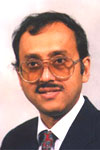
Photograph of Professor Supriyo Bandyopadhyay
Professor Supriyo Bandyopadhyay, Virginia Commonwealth University, will be the speaker at the IEEE Richmond Section's Thursday, 4 January 2007 monthly meeting. The dinner meeting will start at 5:30 PM at the Hilton Garden Inn at Innsbrook. Reservations can be made at http://www.ieee.org/richmond/.

The workhorse of modern electronics is the celebrated “transistor” which serves as the building block of all digital and analog circuits. However, as transistor dimensions shrink, a host of complicating issues begins to emerge that detracts from the transistor’s performance. They can only be mitigated with mounting costs. It therefore behooves us to seek alternate paradigms for computing and signal processing that bypasses the transistor paradigm. In one example, the pixel intensities of a grey scale image are encoded in the voltage states of individual nanowires. The nanowires are then allowed to interact and the final steady state voltages are de-encoded into pixel intensities. The final pixel intensities represent edge enhancement detection. Thus, the array of nanowires can perform useful image processing functions. Many other such examples will be presented.

Dr. Supriyo Bandyopadhyay is a professor of electrical and computer engineering and a professor of physics at Virginia Commonwealth University. He directs the Quantum Device Laboratory engaged in research on nanostructured devices and systems. Prof. Bandyopadhyay is the current chair of the IEEE Nanotechnology Council Technical Committee on Spintronics and the IEEE Electron Device Society Technical Committee on Compound Semiconductor Devices and Circuits. He is also the Chair of the Regional Interest Group of the IEEE Nanotechnology Council and Vice President (Conferences) Elect of the Nanotechnology Council of the IEEE. He is profiled in numerous Who ’s Who and is a Fellow of the IEEE, American Physical Society, the Institute of Physics (UK),the Electrochemical Society and the American Association for the Advancement of Science.

Sunday, November 26, 2006

IEEE Richmond Section to Honor It's Fellows & Long Term Members


The IEEE Richmond Section will be honoring it's Fellows and long term members at it's monthly meeting on Thursday, 7 December. There are ten IEEE Fellows and six members with 60 years or more of IEEE membership in the Richmond Section. IEEE Region 3 Director Elect Bill Ratcliff will be attending to help with the recognition ceremony. Members are invited to bring a guest as we honor these distinguished members who have contributed to IEEE and our profession. Please register for this meeting at www.ieee.org/richmond

Tuesday, October 10, 2006

Improving the State of Engineering in the USA


IEEE-USA President Ralph W. Wyndrum, Jr. will address the IEEE Richmond Section on how U.S. engineers can succeed in the new global environment, whether engineering is losing its value today, specific IEEE/IEEE-USA programs to maintain U.S. leadership in innovation, and how U.S. IEEE members can help foster the innovation process.

Meeting Date & Time:Thursday, 2 November 2006 5:30 PM: Registration, social time, and dinner 7:30 PM: Business meeting & program
Where: Hilton Garden Inn at Innsbrook
Location: It’s behind the restaurants at Innsbrook. Turn from Broad St. onto Dominion Blvd.There's a map link on the IEEE Richmond Section website.
Cost: $20 by the RSVP deadline, $25 after the deadline. Student members get in for $10 before or $13 after the deadline.
Menu: An all-you-can-eat buffet
Payment: By check payable to IEEE Richmond or cash, during Registration (5:30 PM - 6:30 PM).
RSVP & Deadline: By high-noon on Friday, 27 October. Go the the Web site www.ieee.org/richmond, click NextMeeting, and then the Online RSVP link.

Friday, September 22, 2006

Autonomic Grid Computing: Concepts, Infrastructure and Applications


Emerging pervasive wide-area Grid computing environments are enabling a new generation of applications that are based on seamless aggregation and interactions of resources, services and information. However the scale, dynamism and uncertainty of these environments and applications present significant development, configuration and management challenges.

Addressing these challenges has led researchers to consider alternative programming paradigms and management techniques that are based on strategies used by biological systems to deal with complexity, dynamism, heterogeneity and uncertainty. The approach, referred to as autonomic computing, aims at realizing computing systems and applications capable of managing themselves with minimal human intervention. In this talk Dr. Parashar will motivate and introduce autonomic Grid computing. He will then introduce solutions being developed at TASSL, Rutgers University as part of Project AutoMate for enabling autonomic computational science on the Grid.

Manish Parashar is Professor of Electrical and Computer Engineering at Rutgers University, where he also is director of the Applied Software Systems Laboratory. He received a BE degree in Electronics and Telecommunications from Bombay University, India and MS and Ph.D. degrees in Computer Engineering from Syracuse University. He has received the Rutgers Board of Trustees Award for Excellence in Research (2004-2005), NSF CAREER Award (1999) and the Enrico Fermi Scholarship from Argonne National Laboratory (1996). His research interests include autonomic computing, parallel & distributed computing (including peer-to-peer and Grid computing), scientific computing, and software engineering. Manish is a senior member of IEEE, member of the executive committee of the IEEE Computer Society Technical Committee on Parallel Processing (TCPP), part of the IEEE Computer Society Distinguished Visitor Program (2004-2006), and a member of ACM. He is the co-founder of the IEEE International Conference on Autonomic Computing (ICAC), serves on the editorial boards
of several journals, and on the steering and program committees of several international
workshops and conferences. For more information please visit http://www.caip.rutgers.edu/~parashar/. He is recommended to us by the Washington,
DC, IEEE Computer Society chapter.

Meeting Date & Time:
Thusday, 5 October 2006
5:30 PM: Registration, social time, and dinner
7:30 PM: Business meeting & program
Where: Hilton Garden Inn at Innsbrook
Location: It’s behind the restaurants at Innsbrook. Turn from Broad St. onto Dominion Blvd.
There's a map link on the IEEE Richmond Section website.
Cost: $20 by the RSVP deadline, $25 after the deadline. Student members get in for $10 before or $13 after the deadline.
Menu: An all-you-can-eat buffet
Payment: By check payable to IEEE Richmond or cash, during Registration (5:30 PM - 6:30 PM).
RSVP & Deadline: By high-noon on Friday, 29 September. Go the the Web site, click Next
Meeting, and then the Online RSVP link.

Friday, September 08, 2006

Error on IEEE-USA Printed Ballot

There has been an error on the printed ballots for the IEEE-USA elections which inadvertently reversed the candidates for IEEE-USA President-Elect and IEEE-USA Member-at-Large.

Here is a message from Michael Lightner, IEEE President and CEO:
"Dear IEEE Voting Member:
You will soon be receiving, or may have already received, your individual ballot materials for the 2006 IEEE Annual Election. I am writing to alert you that an error on the printed ballots for the IEEE-USA categories inadvertently reversed the candidates for IEEE-USA President-Elect and IEEE-USA Member-at-Large. To correct this, we are sending all eligible voting members in Regions 1-6 a second paper ballot that covers the IEEE-USA slates of office only. This ballot includes a notice on the envelope to help you identify it and an explanation and instructions inside. I urge you to watch for both of these mailings.

Please do not discard the initial ballot as we are asking you to return both ballots if you submit them by U.S. mail. If you submit your ballot electronically at http://www.ieee.org/elections or https://www.directvote.net/ieee/ this change does not apply. All ballot materials accessed via the election Web sites are correct.

For members who are submitting ballots by U.S. mail, both ballots are required for the following reasons:
- To ensure your votes will be recorded in all categories since votes for the two IEEE-USA positions on the initial paper ballot will be invalidated.
- If you do not also submit the initial ballot, you will not be voting in all of the other categories for which you are eligible.
- Please note that if you submit only one of the paper ballots, you will be contacted by the vendor and urged to cast the other ballot.

The opportunity to vote in the IEEE Annual Election is a privilege of your membership, and your vote is important to the IEEE. I encourage you to learn as much as you can about the candidates and participate in the annual election when you receive your ballot materials. Additional information about the candidates including video question and answer sessions with the IEEE President-Elect candidates, and links to many candidates Web sites, is also available from the annual election Web site.

I am very sorry for any inconvenience to our members and our candidates caused by the necessity to send you two paper ballots this year. Please remember to return both forms if you submit your ballot by U.S. mail or, instead, submit your ballot electronically.

If you have any questions, please contact corp-election@ieee.org .

I thank you in advance for your understanding and your help in enabling the IEEE to have a successful 2006 election.
Sincerely,
Michael Lightner
IEEE President and CEO"

Monday, August 07, 2006

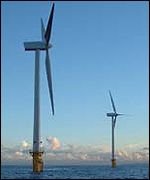
Wind Energy: Opportunities and Challenges for Off-Shore Applications


Offshore Wind Energy will be the topic of the next IEEE Richmond Section meeting on Thursday, 7 September 2006 at the Hilton Garden Inn Innsbrook. Social, Dinner & Speaker: 5:30PM. RSVP by Noon, Friday, 1 September 2006


Wind Energy:
Opportunities and Challenges for Off-shore Applications

Professor Saifur Rahman
Advanced Research Institute
Virginia Tech
With the worldwide generation of electricity from wind power reaching almost 60,000 megawatts at the end of 2005, this has become a significant source of electricity worldwide. In fact wind turbine generators accounted for 2% of the worldwide capacity for electricity generation at the end of 2005. As the land-based sites for wind energy projects are facing organized opposition in some parts of the world, the interest in off-shore wind energy exploration is growing. While it is more expensive to install wind turbine generators and their associated infrastructure in the water than in land, the available wind regime is usually better, and cost of "land" is cheaper.


This presentation examines the opportunities and challenges provided by large-scale offshore wind energy power plants. It provides a detailed history of the growth of wind energy throughout the world during the last 15 years, and traces the cost, size and country-specific penetration issues of wind energy. In that regard the presentation looks at the situation in Germany, United States, Denmark, India and Spain – the five top performing wind energy markets in the world. The market penetration and energy cost issues as well as environmental concerns from wind energy technologies are explored.

Monday, July 03, 2006

Electronics Merit Badge Kit Available


The IEEE emeritbadges.org Program developed an electronics kit to be used in conjunction with the Boy Scout Electronics Merit Badge. The kit contains a PIC microcontroller that is preprogrammed with 4 modes of operation. Kit Parts consist of a 3"x 3" box, PC board, components, and battery holder. Kits can be purchased for a unit price of $15.00.

The kits were introduced and first used at the 2005 National Jamboree in Caroline County, Virginia.