 Revolutionary and evolutionary advances in thermal packaging technology have underpinned the continuous improvement in the performance, packaging density, and reliability achieved in solid state electronic products. Rising chip heat fluxes and packaging density, driven by Moore’s Law, have necessitated ever more aggressive cooling techniques, capable of reducing the junction-to-ambient thermal resistance, while meeting the cost, volume, and weight constraints appropriate to each class of electronic equipment. As these needs have escalated, attention has shifted from the external packaging levels towards the module and board level, then the package level, and is today focused on heat removal at the chip level. Current trends suggest that on-chip hot spots will drive the choice of future thermal packaging technology. Applicable thermal management techniques and their potential for hot spot remediation, including thermoelectric microcoolers, anisotropic spreaders/TIMs, and direct cooling with dielectric liquids through thin film evaporation or pool boiling, will be considered.The meeting will be held at Qimonda at 6000 Technology Blvd., Sandston, VA at 5:30 PM. Guests should register at www.ieee.org/richmond.
Thursday, February 15, 2007
"Semiconductor Thermal Packaging - the Moving Frontier"
Revolutionary and evolutionary advances in thermal packaging technology have underpinned the continuous improvement in the performance, packaging density, and reliability achieved in solid state electronic products. Rising chip heat fluxes and packaging density, driven by Moore’s Law, have necessitated ever more aggressive cooling techniques, capable of reducing the junction-to-ambient thermal resistance, while meeting the cost, volume, and weight constraints appropriate to each class of electronic equipment. As these needs have escalated, attention has shifted from the external packaging levels towards the module and board level, then the package level, and is today focused on heat removal at the chip level. Current trends suggest that on-chip hot spots will drive the choice of future thermal packaging technology. Applicable thermal management techniques and their potential for hot spot remediation, including thermoelectric microcoolers, anisotropic spreaders/TIMs, and direct cooling with dielectric liquids through thin film evaporation or pool boiling, will be considered.The meeting will be held at Qimonda at 6000 Technology Blvd., Sandston, VA at 5:30 PM. Guests should register at www.ieee.org/richmond.


Sunday, February 04, 2007
EWeek 2007 Just Around the Corner (18-24 Feb.)
 IEEE-USA will again play a key role in activities surrounding Engineers Week 2007, 18-24 Feb. Festivities get underway in Washington, D.C., with Discover Engineering Family Day at the National Building Museum on 17 Feb. And IEEE-USA is sponsoring the Best Communications System Award and the essay question for the 15th anniversary of the EWeek Future City Competition in Washington. IEEE-USA also helped with the proposal that led to the IEEE becoming a major sponsor of the new engineering-based PBS television show, Design Squad, which launches during EWeek. Check with your local IEEE Section to see how you can participate in EWeek 2007.
The IEEE Richmond Section will be celebrating Engineers Week 2007at the Richmond Joint Engineers' Council (RJEC) banquet 22 February at the Jefferson Hotel in Richmond, VA. The guest speaker at the banquet will be LTG Carl A. Strock, Chief of Engineers and Commanding General U.S. Army Corps of Engineers. The IEEE Richmond Section will also be participating in "Career Day" at the Science Museum of Virginia in Richmond.
Sunday, January 21, 2007
Helicopters and Power
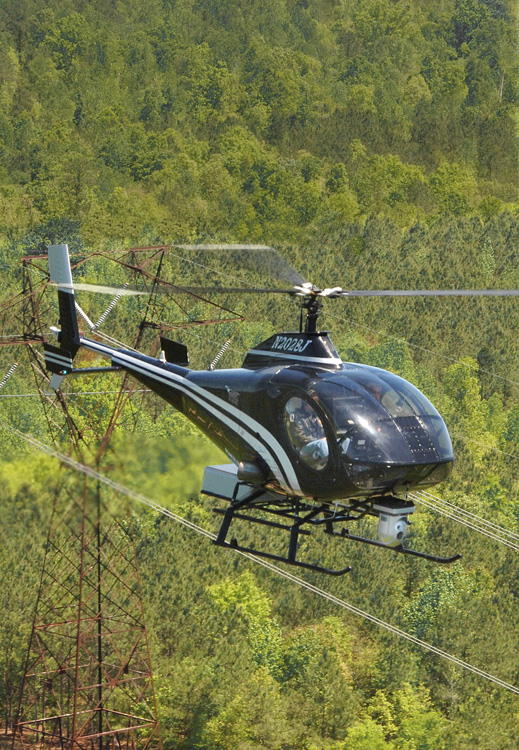
Dominion Virginia Power has partnered with Chesapeake Bay Helicopters to develop one of the most sophisticated electronic surveillance helicopters in the world. By combining the highest
quality sensors available to detect potential problems with high-voltage transmission lines, Dominion has greatly improved the efficiency of inspecting lines to further increase the reliability of service to electric customers. The helicopter can also perform extremely acurate aerial surveying with the onboard LIDAR system and GPS system. One of the most challenging aspects of the project has been handling the terabytes of data gathered in the imagery and survey data.
Rachel O'Donnell, a Technical Specialist at Dominion, will present "Helicopters and Power" to the IEEE Richmond Section at their Thursday, 1 February 2007 meeting. The meeting will be held a the Hilton Garden Inn at Innsbrook in Glen Allen, VA at 5:30 PM. The meeting is open to the public. Guests should register at www.ieee.org/richmond.
Tuesday, December 26, 2006
NanoWires: The New Nanoelectronics
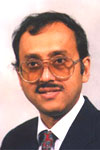
Professor Supriyo Bandyopadhyay, Virginia Commonwealth University, will be the speaker at the IEEE Richmond Section's Thursday, 4 January 2007 monthly meeting. The dinner meeting will start at 5:30 PM at the Hilton Garden Inn at Innsbrook. Reservations can be made at http://www.ieee.org/richmond/.
The workhorse of modern electronics is the celebrated “transistor” which serves as the building block of all digital and analog circuits. However, as transistor dimensions shrink, a host of complicating issues begins to emerge that detracts from the transistor’s performance. They can only be mitigated with mounting costs. It therefore behooves us to seek alternate paradigms for computing and signal processing that bypasses the transistor paradigm. In one example, the pixel intensities of a grey scale image are encoded in the voltage states of individual nanowires. The nanowires are then allowed to interact and the final steady state voltages are de-encoded into pixel intensities. The final pixel intensities represent edge enhancement detection. Thus, the array of nanowires can perform useful image processing functions. Many other such examples will be presented.
Dr. Supriyo Bandyopadhyay is a professor of electrical and computer engineering and a professor of physics at Virginia Commonwealth University. He directs the Quantum Device Laboratory engaged in research on nanostructured devices and systems. Prof. Bandyopadhyay is the current chair of the IEEE Nanotechnology Council Technical Committee on Spintronics and the IEEE Electron Device Society Technical Committee on Compound Semiconductor Devices and Circuits. He is also the Chair of the Regional Interest Group of the IEEE Nanotechnology Council and Vice President (Conferences) Elect of the Nanotechnology Council of the IEEE. He is profiled in numerous Who ’s Who and is a Fellow of the IEEE, American Physical Society, the Institute of Physics (UK),the Electrochemical Society and the American Association for the Advancement of Science.
Sunday, November 26, 2006
IEEE Richmond Section to Honor It's Fellows & Long Term Members

The IEEE Richmond Section will be honoring it's Fellows and long term members at it's monthly meeting on Thursday, 7 December. There are ten IEEE Fellows and six members with 60 years or more of IEEE membership in the Richmond Section. IEEE Region 3 Director Elect Bill Ratcliff will be attending to help with the recognition ceremony. Members are invited to bring a guest as we honor these distinguished members who have contributed to IEEE and our profession. Please register for this meeting at www.ieee.org/richmond
Tuesday, October 10, 2006
Improving the State of Engineering in the USA

IEEE-USA President Ralph W. Wyndrum, Jr. will address the IEEE Richmond Section on how U.S. engineers can succeed in the new global environment, whether engineering is losing its value today, specific IEEE/IEEE-USA programs to maintain U.S. leadership in innovation, and how U.S. IEEE members can help foster the innovation process.
Meeting Date & Time:Thursday, 2 November 2006 5:30 PM: Registration, social time, and dinner 7:30 PM: Business meeting & program
Where: Hilton Garden Inn at Innsbrook
Location: It’s behind the restaurants at Innsbrook. Turn from Broad St. onto Dominion Blvd.There's a map link on the IEEE Richmond Section website.
Cost: $20 by the RSVP deadline, $25 after the deadline. Student members get in for $10 before or $13 after the deadline.
Menu: An all-you-can-eat buffet
Payment: By check payable to IEEE Richmond or cash, during Registration (5:30 PM - 6:30 PM).
RSVP & Deadline: By high-noon on Friday, 27 October. Go the the Web site www.ieee.org/richmond, click NextMeeting, and then the Online RSVP link.
Friday, September 22, 2006
Autonomic Grid Computing: Concepts, Infrastructure and Applications

Emerging pervasive wide-area Grid computing environments are enabling a new generation of applications that are based on seamless aggregation and interactions of resources, services and information. However the scale, dynamism and uncertainty of these environments and applications present significant development, configuration and management challenges.
Addressing these challenges has led researchers to consider alternative programming paradigms and management techniques that are based on strategies used by biological systems to deal with complexity, dynamism, heterogeneity and uncertainty. The approach, referred to as autonomic computing, aims at realizing computing systems and applications capable of managing themselves with minimal human intervention. In this talk Dr. Parashar will motivate and introduce autonomic Grid computing. He will then introduce solutions being developed at TASSL, Rutgers University as part of Project AutoMate for enabling autonomic computational science on the Grid.
Manish Parashar is Professor of Electrical and Computer Engineering at Rutgers University, where he also is director of the Applied Software Systems Laboratory. He received a BE degree in Electronics and Telecommunications from Bombay University, India and MS and Ph.D. degrees in Computer Engineering from Syracuse University. He has received the Rutgers Board of Trustees Award for Excellence in Research (2004-2005), NSF CAREER Award (1999) and the Enrico Fermi Scholarship from Argonne National Laboratory (1996). His research interests include autonomic computing, parallel & distributed computing (including peer-to-peer and Grid computing), scientific computing, and software engineering. Manish is a senior member of IEEE, member of the executive committee of the IEEE Computer Society Technical Committee on Parallel Processing (TCPP), part of the IEEE Computer Society Distinguished Visitor Program (2004-2006), and a member of ACM. He is the co-founder of the IEEE International Conference on Autonomic Computing (ICAC), serves on the editorial boards
of several journals, and on the steering and program committees of several international
workshops and conferences. For more information please visit http://www.caip.rutgers.edu/~parashar/. He is recommended to us by the Washington,
DC, IEEE Computer Society chapter.
Meeting Date & Time:
Thusday, 5 October 2006
5:30 PM: Registration, social time, and dinner
7:30 PM: Business meeting & program
Where: Hilton Garden Inn at Innsbrook
Location: It’s behind the restaurants at Innsbrook. Turn from Broad St. onto Dominion Blvd.
There's a map link on the IEEE Richmond Section website.
Cost: $20 by the RSVP deadline, $25 after the deadline. Student members get in for $10 before or $13 after the deadline.
Menu: An all-you-can-eat buffet
Payment: By check payable to IEEE Richmond or cash, during Registration (5:30 PM - 6:30 PM).
RSVP & Deadline: By high-noon on Friday, 29 September. Go the the Web site, click Next
Meeting, and then the Online RSVP link.
Subscribe to:
Posts (Atom)
